
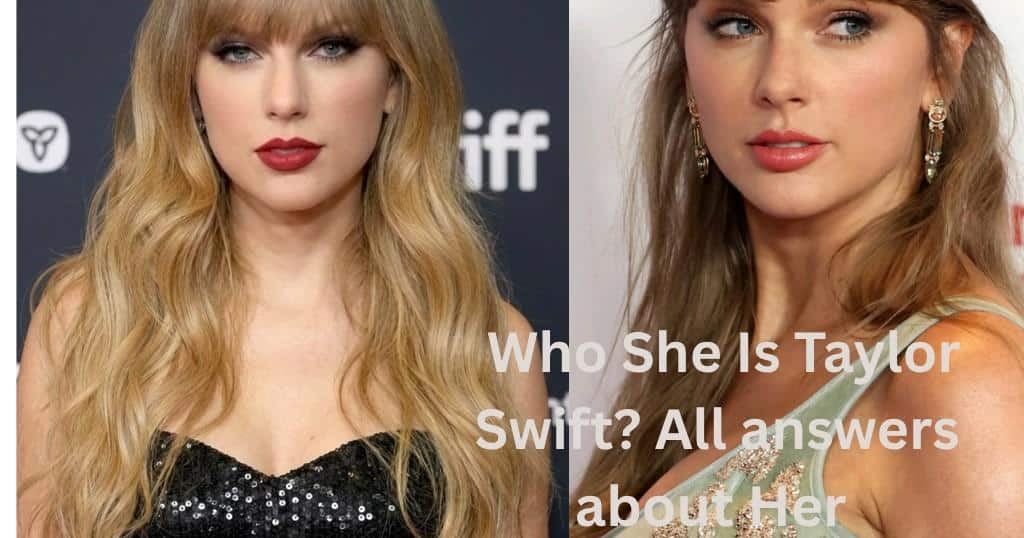
If you have somehow made it to 2026 without hearing Taylor Swift’s name… I genuinely want to know your secrets. Because she’s not just “a famous singer” in the background anymore. She’s the headline. She’s the punchline. She’s the business case study. She’s the reason your friend suddenly cares about NFL playoff seeding. She’s the artist your dad pretends not to like, then asks you to play that one song in the car.
And that’s the thing. Taylor Swift isn’t only everywhere because she’s popular. Plenty of artists are popular.
She’s everywhere because she has become a kind of cultural infrastructure. Like, she sits under so many different conversations now. Music, touring economics, streaming politics, feminism, fandom, sports media, celebrity relationships, even local government tax revenue when her tour rolls into town.
So let’s do it properly.
Who is she? What did she actually do to get here? And why, in 2026, does it still feel like she’s somehow getting bigger?
Who is Taylor Swift ?
Taylor Swift is a singer songwriter who started as a teenage country artist and grew into a global pop star, then evolved again into something closer to a full on creative franchise. Not in a cynical way, either. More like… she’s an author who happens to write with melodies.
She was born in 1989 (yes, that album title was not subtle). She broke out in the mid 2000s in Nashville with country songs that sounded like diary entries, except they were radio ready diary entries with hooks you couldn’t shake. Early Taylor was sharp, specific, emotionally direct. She wrote about high school, small town stuff, crushes, betrayal, all of it. But she wrote it like she was already a professional storyteller.
And then she just didn’t stop.
Over time, her genre changed. Country to pop, then into indie leaning folk, then back to pop, then into synth pop, then more muted songwriting again. But the anchor stayed the same: she builds songs like scenes. Names, objects, timestamps, textures. A scarf. A hallway. A dress. A phone call that doesn’t come.
And if you think that kind of writing is easy, it’s not. Most people write vague breakup songs. Taylor writes a breakup song that feels like it happened to you personally, even if you were single the whole year.
She’s also quietly one of the defining business figures in modern music which sounds like a weird compliment but it matters. She’s not only “managed well.” She learned the machinery and then started steering it.
That part is a huge reason she’s everywhere now.
Interestingly enough, her influence extends beyond music into other areas such as sports and even local government tax revenue when her tour rolls into town – similar to how Lil Bow Wow has made his mark in various sectors beyond just music with significant financial success and influence.
The real Taylor Swift,s skill
Yes, the songs are catchy. Yes, she has stage presence. Yes, she’s a strong vocalist, and she’s gotten better over the years.
But the actual superpower is narrative control. Not control like “she manipulates people.” More like she understands that humans don’t just consume songs, they consume meaning. They want an arc. They want context. They want a feeling that this moment connects to a larger story.
Taylor builds that story, on purpose, across years.
She creates eras. She makes albums feel like seasons of a TV show. She gives fans puzzles, visual motifs, recurring themes, callbacks. She trains people to pay attention, then rewards them for paying attention. And the reward isn’t only Easter eggs. It’s the feeling of being in on something.
That’s rare. And it’s sticky.
And honestly… it’s why you can’t just casually listen to Taylor Swift. You either don’t care at all, or you gradually become someone with opinions about track five and the original vs re recorded bridge.
How she got from huge to unavoidable
Taylor Swift was already one of the biggest artists on earth before the 2020s. But the version of “everywhere” we’re talking about now, the saturation, the cultural takeover feeling, that is more recent.
A few major accelerants did it.
1. The re recordings changed the way people see her
When she started re recording her old albums to own the masters (Taylor’s Version), it wasn’t just a rights dispute. It became a public lesson in intellectual property, artist control, and how the music industry actually works.
And it did something else too.
It reintroduced her catalog to an entirely new generation. People who were ten when the original songs came out were suddenly twenty one, streaming the new versions like they were fresh releases. Meanwhile older fans came back for nostalgia. Meanwhile the media covered each drop like an event.
So instead of her past being “old music,” it became current again. That’s a big deal.
Most artists have a peak, then a legacy phase. Taylor turned the legacy phase into a second peak.
2. The Eras Tour turned into a world level phenomenon
The Eras Tour wasn’t just a tour that sold out. It became an economic event. Cities competed for dates. Hotels spiked prices. Local businesses made themed menus. News outlets covered the crowd outfits like it was fashion week.
And then the concert film extended the life of it. People who couldn’t get tickets still participated. Parents took kids. Friends made it a ritual. It became a shared reference point, like a blockbuster movie that everyone has seen.
When something is that big, it stops being “for fans.” It becomes general culture.
3. She learned the modern attention economy better than almost anyone
Here’s a slightly annoying truth: being talented is not enough anymore. Not when every app is trying to steal your eyes every five seconds.
Taylor’s releases and appearances tend to feel timed, framed, and packaged in a way that fits how people actually talk online. Not because she’s chasing trends. More like she understands the rhythms.
A surprise song goes viral. A lyric becomes a caption template. A relationship becomes a media narrative. A red carpet photo becomes a discourse. It’s not random. It’s a machine.
And she fuels it without exhausting people. That might be the hardest part.
Why she’s still everywhere in 2026
Okay. Let’s get to the actual point. Why is this still happening.
Because by now, Taylor Swift isn’t one thing. She’s like five overlapping things, and each one feeds the other.
She’s a musician, yes. But also a back catalog machine
A normal artist drops an album, tours it, then disappears for a bit.
Taylor has a catalog that fans treat like a library. And the library keeps getting republished, recontextualized, and re ranked. Even if she didn’t release anything new this year, her old work would still generate constant content.
People debate songs like they’re chapters. They analyze lyrics like they’re poems. They clip live performances and compare changes from night to night. It’s not passive listening, it’s participation.
So her “everywhere” presence isn’t dependent on a single new hit. It’s structural.
She’s a fandom platform, basically
Swifties are one of the most organized fandoms in pop culture, and that’s not a joke. They mobilize like a tiny digital country. They track setlists, decode hints, build spreadsheets, make TikToks, write essays, and yes, argue.
And the thing about fandoms is that they produce media. Like, they create the ecosystem around the artist. They keep the topic trending. They keep the references alive. They keep new people getting pulled in.
Taylor benefits from this, obviously. But she also feeds it. She gives fans enough material to work with. That feedback loop is extremely powerful.
She’s a celebrity who crosses bubbles
A lot of celebrities are huge in one lane and invisible in another.
Taylor is one of the few who shows up across bubbles that don’t normally overlap.
Pop music fans. Country nostalgia listeners. Indie leaning lyric people. Fashion watchers. Award show viewers. Sports audiences. Parents. Teen girls. Millennials. Corporate marketers. Political commentators. Tech bros who swear they hate pop but somehow know the lyrics to “All Too Well.”
It’s not that everyone loves her. It’s that everyone is aware of her. Awareness is its own kind of dominance.
She’s become a symbol people argue through
This is where things get messy.
Taylor Swift is now a stand-in for larger debates: about feminism, about success, about who gets to be ambitious, about whiteness in pop, about capitalism, about media obsession, about fan entitlement, about authenticity, about power.
Some people praise her as a model of artistic control. Some people think she’s overexposed. Some people see her as a marketing genius. Some people see her as proof the industry rewards safe choices. Some people think she’s underrated as a writer. Some people think she’s overpraised.
The point is not who’s right. The point is that she has become a cultural object people use to talk about other things.
When a person becomes a symbol, they show up everywhere, even in conversations that aren’t “about them.”
The relationship factor
We can pretend celebrity relationships don’t matter, but they do. Not because fans are shallow. It’s because relationships are one of the main ways pop culture becomes legible. It gives people a story hook.
In the mid 2020s, Taylor’s public relationship with an NFL star dragged her into a whole new arena. Sports media, which normally treats pop stars like halftime decoration, had to cover her seriously because the audience cared. Cameras looked for her. Commentators mentioned her. Teams posted about her. The league benefited from the attention. She benefited from the expanded reach.
And it created that very specific 2020s phenomenon: people who do not listen to her music still having an opinion about her presence.
That’s the definition of everywhere.
This phenomenon mirrors the cultural impact seen in other realms as well, such as in film with the recent discussions surrounding Veronica Litt’s character in Clueless on its 30th anniversary. Just like Taylor Swift, certain characters or celebrities become symbols that spark broader discussions and reflections in society.
The business side: why brands and media can’t stop circling her
Taylor Swift is also a low risk, high attention topic for media outlets. Which sounds harsh, but it’s just how media works.
A Taylor headline gets clicks. A Taylor rumor gets shares. A Taylor outfit gets engagement. A Taylor tour update gets readers. A Taylor “this might mean something” post gets comments.
Brands like her because she signals scale. She’s safe enough to be mainstream but interesting enough to feel current. She’s glamorous but also sells relatability. She has the prestige of awards, the numbers of streaming, the economic impact of touring, and the cultural reach of a meme.
In 2026, with advertising and media economics still kind of broken, anything that reliably pulls attention becomes a magnet. Taylor is that magnet.
Is she actually that good, or is it just hype?
This is where people split.
If you are not a fan, it’s easy to assume it’s all marketing. If you are a fan, it’s easy to assume criticism is just jealousy or misogyny.
Reality is more boring and more interesting at the same time.
She is extremely good at songwriting, specifically at clarity and detail and emotional timing. She is also extremely good at building a career strategy that compounds instead of resetting. And yes, she has a very strong team and marketing apparatus. Of course she does. People at her level don’t wing it.
But marketing can’t make people feel something they don’t feel. It can amplify. It can package. It can position. It cannot fake a decade plus of genuine emotional connection at scale.
If you want the simplest explanation for why she’s still here, still huge:
She writes songs that make people feel understood. Then she gives them a reason to stick around.
That’s it. That’s the whole trick. And it’s not really a trick.
The criticism and backlash, because that’s part of “everywhere” too
When someone is this visible, backlash becomes inevitable. Not always fair, sometimes fair, often a mix.
Common critiques in 2026 look like this:
- Overexposure. People feel like they can’t escape her, and that breeds irritation.
- Private jet and climate conversations. When you are a global tour level celebrity, your footprint is massive. People care. People judge. Some of it is performative, some of it is legitimate concern.
- The question of power. She is not an underdog anymore, and some fans and critics struggle with that shift.
- Fandom behavior. Swifties can be generous and funny and creative, and also intense, and sometimes cruel. That reflects on her even when she doesn’t control it.
- Artistic debate. Some people think her writing is genius. Some think it’s basic. Some think her best work was in quieter, more restrained albums. Some only like the big pop hits.
But backlash is also proof of significance. People don’t form strong opinions about artists who don’t matter to them at all.
If you’re new and want to “get” Taylor Swift quickly
You don’t need to listen to everything. That’s overwhelming and, honestly, a little like homework.
A better approach is sampling her different modes:
- The diaristic country storyteller version.
- The glossy pop architect version.
- The quiet, detailed, literary leaning songwriter version.
- The stadium performer who can command three hours like it’s nothing.
Pick one album from each vibe. Or even just a handful of songs. Then you’ll start to see the pattern.
And once you see the pattern, the hype makes more sense. You might still not like it, but you’ll understand why it works.
So, why is she everywhere?
Because she’s not only releasing music. She’s running a long form narrative that keeps paying off.
Because her catalog doesn’t age out, it cycles back in.
Because her tours turned into public events, not just concerts.
Because her fandom is a content engine.
Because media economics reward her presence.
Because she crosses audience bubbles in a way very few artists can.
And because she’s become a symbol people project bigger conversations onto, whether she asked for that or not.
In 2026, Taylor Swift is everywhere for the same reason the biggest stories are always everywhere. They’re not just entertainment. They’re shared language.
And like it or not, she’s one of the main languages culture keeps speaking right now.
Conlusion:
In 2026, Taylor Swift is more than just a global pop star she is a cultural ecosystem. From her genre-spanning music and record breaking tours to her influence on media, business, and fandom culture, her presence continues to grow rather than fade. What sets her apart is not just talent, but her ability to create a lasting emotional connection while evolving with the times. Whether through storytelling, strategy, or sheer cultural relevance, Taylor Swift has secured her place as one of the most dominant and discussed figures of this generation and her impact shows no signs of slowing down.
FAQs:
Who is Taylor Swift beyond just being a famous singer?
Taylor Swift is a singer-songwriter who began as a teenage country artist and evolved into a global pop star and creative franchise. Born in 1989, she started with emotionally direct, diary-like country songs and has since experimented with pop, indie folk, synth pop, and more, always crafting songs like vivid scenes filled with specific names, objects, and moments.
What makes Taylor Swift’s songwriting unique compared to other artists?
Taylor Swift’s songwriting stands out because of her narrative skill. She writes songs that feel personal and specific, using detailed imagery like scarves or phone calls that never come. Unlike vague breakup songs, hers create emotional connections that feel like they happened to the listener personally, showcasing her ability to tell compelling stories through music.
How has Taylor Swift influenced areas outside of music?
Beyond music, Taylor Swift’s influence extends into sports media, feminism discussions, streaming politics, and even local government tax revenues when her tours visit cities. Her presence impacts various sectors economically and culturally, making her a significant figure not just in entertainment but also in broader societal conversations.
What is the significance of Taylor Swift’s re-recordings known as ‘Taylor’s Version’?
Taylor Swift’s re-recordings are more than just reclaiming her masters—they serve as a public lesson on intellectual property and artist control in the music industry. These re-recordings have reintroduced her catalog to new generations and reignited interest among longtime fans, effectively turning her legacy phase into a second peak in popularity.
Why is Taylor Swift’s Eras Tour considered an economic phenomenon?
The Eras Tour transcended typical concert tours by becoming an economic event where cities competed for dates, hotels raised prices, local businesses created themed menus, and media covered fan fashion extensively. The tour’s massive cultural impact extended through its concert film release, solidifying its status as a world-level phenomenon affecting local economies.
What is Taylor Swift’s ‘superpower’ that people often underestimate?
Taylor Swift’s true superpower lies in narrative control—her ability to build long-term storytelling arcs across albums and eras. She creates immersive experiences for fans with visual motifs, recurring themes, puzzles, and callbacks that reward attention to detail. This approach fosters deep fan engagement that goes beyond casual listening.

Abdul is the writer and entertainment blogger for CelebrityVibers. He is an expert at writing about the latest celebrity news, red carpet updates, social media buzz, and pop culture trends in a way that is interesting and easy to read. Abdul is passionate about keeping fans up to date on everything from celebrity lifestyle stories to behind the scenes events in the entertainment world.
1 thought on “Who Is Taylor Swift and Why She’s Everywhere (2026)”